DOL just cut apprenticeship paperwork: how a small trade shop can register a program for 2027
A Labor Department rule taking effect Jan. 5, 2027 drops the affirmative-action paperwork that put small HVAC, plumbing and electrical shops off Registered Apprenticeship. Here's what's gone, what still applies, and a five-step plan to register.
By Rivet Editorial Team · · 7 min read
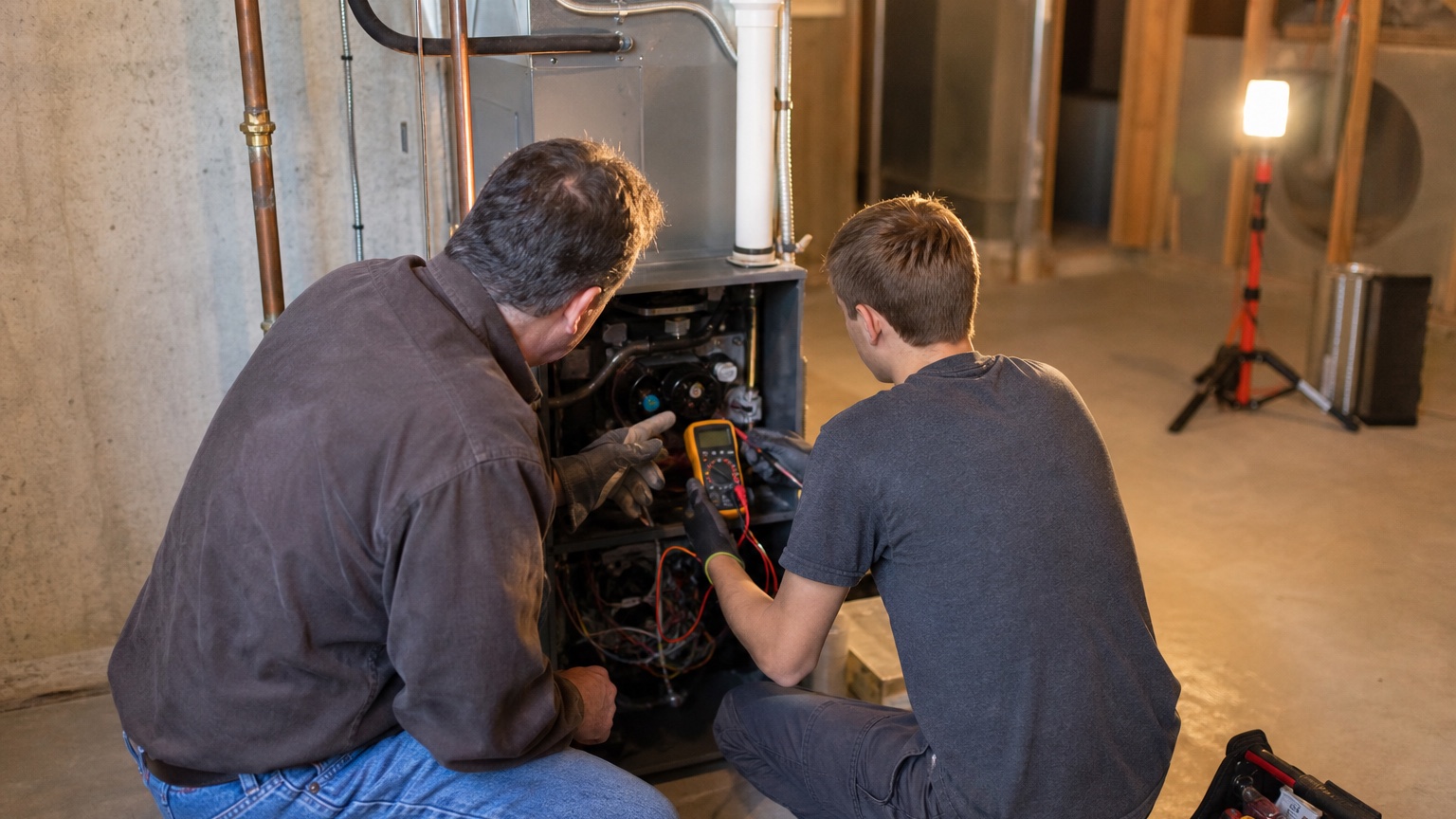
Short version: on November 6, 2026 the U.S. Department of Labor published a final rule that strips most of the affirmative-action paperwork out of Registered Apprenticeship. It takes effect January 5, 2027. If you skipped registering an apprenticeship program because the compliance side looked like a job for an HR department you don't have, the federal side of that just got much lighter. Here is what changed, what did not, and a step-by-step path for a 3-to-30-tech HVAC, plumbing or electrical shop.
What the new rule removes
The rule rewrites 29 CFR part 30, the equal-opportunity regulation every registered program sponsor had to follow. According to the Federal Register notice, it removes these requirements:
- Naming a staff person to manage the program's EEO policy.
- Anti-harassment training required specifically by the apprenticeship rule.
- Posting an Equal Opportunity pledge in your program standards and at the sites where apprentices train.
- Prescribed selection procedures for choosing apprentices, and the part 30 recordkeeping rules that went with them.
- The five-apprentice trigger. Under the old rule, a sponsor with five or more apprentices had to run demographic utilization analyses at least once every 3 years, set utilization goals, keep a written affirmative action program and invite apprentices to self-identify a disability. All of that is gone.
DOL's own estimate is that the change saves Registered Apprenticeship stakeholders more than $1 billion in compliance costs over 10 years.
For a small shop, the five-apprentice trigger mattered most. Five apprentices is a realistic number for a growing 15-tech company, and the old rule made that the point where the paperwork jumped.
What still applies
This is not a free pass, and the details matter.
Discrimination is still illegal
The new section 30.3 says sponsors must follow every federal and state law that bans discrimination based on race, color, religion, national origin, sex, age (40 or older), genetic information or disability. Breaking those laws in a way that touches an apprentice or an applicant can still get your program deregistered.
You have to self-report final findings
If a court or an enforcement agency makes a final ruling, with no appeal left, that you discriminated against an apprentice or applicant, you must tell your registration agency in writing within 60 days. You also have to send a copy of the decision and describe the remedy you were ordered to provide.
Complaints go somewhere else now
The registration agency will no longer handle discrimination complaints itself. It will refer the person to the EEOC, the U.S. Attorney General, a state fair-employment agency or another agency that has jurisdiction.
Your state may keep its own rules
Many states register apprenticeships through a State Apprenticeship Agency (SAA) instead of DOL's Office of Apprenticeship. The new rule gives each SAA one year from January 5, 2027 to submit a state nondiscrimination plan. States can run on state law and state paperwork. So if you are in an SAA state, ask your state office what it will still require before you assume the federal cut applies to you. DOL's state-offices page shows which kind of state you are in.
The old rules apply until January 5
Programs registered now still follow the current part 30 until the effective date. If you are registering in December, don't throw out the EEO pledge yet.
The rules for the program itself did not change
The core program standards are in 29 CFR 29.5, and the November rule only made technical edits to that part. To be registered, your written program must cover the following.
- Length. Either at least 2,000 hours of on-the-job learning (time-based), shown competency (competency-based), or a mix of both (hybrid). Most electricians and plumbers come up through 4- or 5-year apprenticeships, BLS says, so a time-based program in these trades usually runs far past the 2,000-hour floor.
- A work-process outline. A list of what the apprentice learns on the job and about how much time each part takes.
- Related instruction. DOL recommends at least 144 hours per year. It can be classroom, online or an industry course. An instructor can be a recognized journeyworker, but they need some training in teaching adults.
- A wage ladder. Wages must step up as skills grow, and the starting wage can't be below the federal minimum wage or any higher wage that state law or a union contract requires.
- A supervision ratio. You set a specific apprentice-to-journeyworker ratio and say whether it applies per job site, per crew or company-wide.
- Probation. No longer than 25% of the program or 1 year, whichever is shorter, and it counts toward completion.
- The basics. A minimum entry age of 16, safety training, regular performance reviews and progress records, and a written apprenticeship agreement signed with each apprentice.
Your state licensing board may have its own rules on apprentice registration, supervision ratios and the hours that count toward a journeyman license. Check those first. A registered program that doesn't line up with your state's license path won't help you recruit.
A step-by-step plan for a small shop
1. Decide if it is worth it
You still pay apprentices to learn. Registration doesn't make that cheaper. What it gives you is structure, a nationally recognized credential and access to help that's hard to get otherwise. Apprenticeship.gov lists these benefits:
- Free technical help from apprenticeship consultants.
- State tax credits for apprenticeship in many states.
- Federal funding resources.
- A recruiting edge with veterans: those who qualify for GI Bill benefits can get a monthly stipend on top of the wages you pay.
The labor math is the real reason. BLS projects about 72,700 openings a year for electricians, 42,000 for plumbers, pipefitters and steamfitters and 40,600 for HVACR mechanics and installers on average from 2025 to 2035. You won't hire your way out of that. Training your own techs is the only supply you control.
2. Find out who registers you
Look up your state on DOL's state-offices page. In an Office of Apprenticeship state, you register with federal staff through DOL's standard paperwork. In an SAA state, you work with state staff, who may use their own forms and systems.
3. Don't start from a blank page
Apprenticeship.gov has an "Express Interest" form that connects you with an apprenticeship consultant. It also has a Standards Builder tool for drafting your program standards online. You may also be able to sign on to an existing program run by a trade association, union or college instead of sponsoring your own. The site's Partner Finder can help you look. For a shop with one or two apprentices, that's often the easier path.
4. Write the four pages that matter
Most of a program comes down to four documents:
- Work processes: for an HVAC service apprentice, for example, maintenance and safety, then diagnostics, then refrigerant work, then installs.
- The wage ladder, tied to hours or skills you can actually check.
- The ratio and who signs off on hours.
- The related-instruction plan: which school or online course, how many hours, and who pays.
Here is an example wage ladder for a 4-year time-based program, shown as a percent of your own journeyman rate. It's an illustration only: DOL requires the ladder to go up but doesn't set the steps.
- Hours 0–1,000: 50%
- 1,001–2,000: 55%
- 2,001–4,000: 65%
- 4,001–6,000: 75%
- 6,001–8,000: 85%
- Completion: journeyman rate
Check every step against your state's minimum wage. Also check it against any prevailing-wage rules on public jobs you bid.
5. Submit, and hold DOL to its clock
In 2026, DOL's Office of Apprenticeship committed to making registration decisions within 30 days of a sponsor's final submission of signed program standards in Standards Builder. It posts monthly results on a public "shot clock" page. That promise covers states where OA registers programs. SAA states set their own timelines. If you are past 30 days in an OA state, ask about it.
Timing: register now or wait?
If you are starting from scratch, build your standards in December and plan to submit them in early January, after the rule takes effect. That way you don't write a part 30 compliance section you won't need.
If you already run a registered program, ask your registration agency in January which of your current EEO documents you can drop. Keep your files until they answer in writing.
Either way, keep good hiring records: job posts, applications and why you chose each person. Federal and state discrimination law still applies. If someone files a complaint with the EEOC or your state agency, those records are your defense.
One more thing for owners who run the phones themselves. An apprentice program works only if your journeyworkers have time to teach, and that time disappears when the senior tech is also the person answering every call. Some shops pass first-line calls to an office person or an AI phone receptionist like Rivet, which answers 24/7, says it's an AI, books jobs on the calendar and sends the owner a summary. That way the senior tech can spend the day teaching the apprentice beside them.
Rule details as of November 2026. The rule takes effect January 5, 2027. This is general information, not legal advice. Confirm the details for your state with your registration agency.
Sources
- Federal Register: Prohibiting Illegal Discrimination in Registered Apprenticeship Programs (final rule, Nov. 6, 2026)
- eCFR: 29 CFR 29.5, Standards of apprenticeship
- Apprenticeship.gov: Registered Apprenticeship Program
- Apprenticeship.gov: Apprenticeship system and state offices (OA vs. SAA)
- Apprenticeship.gov: Program Registration Monthly "Shot Clock"
- BLS Occupational Outlook Handbook: Electricians
- BLS Occupational Outlook Handbook: Plumbers, Pipefitters, and Steamfitters
- BLS Occupational Outlook Handbook: Heating, Air Conditioning, and Refrigeration Mechanics and Installers
Keep reading

Year-end tech pay: 2026 wage data for HVAC, plumbing and electrical, and the new overtime W-2 rule
Current BLS pay medians for HVAC techs, plumbers and electricians at contractors, a simple way to set 2027 raises, and what box 12 code TT and spiffs mean for your 2026 W-2s.
Nov 13, 2026 · 7 min read
Holiday lights tripping the GFCI: an electrician's phone script and the fixes worth quoting
Most holiday-light trip calls are a GFCI doing its job. Here is a 90-second phone script with red flags, an on-site checklist built on the NEC outdoor receptacle rules, and the three fixes to quote.
Nov 21, 2026 · 8 min read
CO alarm calls: what your CSR should say in the first minute, and what the tech checks after
A word-for-word phone script for carbon monoxide alarm calls, a fast way to tell an alarm from a low-battery chirp, and the whole-house checklist your tech should run once the fire department clears the home.
Nov 21, 2026 · 7 min read